Leveraging Operator Assist Technologies to Increase Productivity
-
Hear from Raymond’s iWAREHOUSE Product Manager, Erica Moyer as she explains the importance of leveraging Raymond's operator assist technologies to increase warehouse productivity.
1. What are some of the hardships facing warehousing operations today?
Erica Moyer:
"So, 2020 was pretty unique, the industry saw a large shift within the market that altered long-standing customer behaviors. Industries that typically had seen the majority of their business come through in-person transactions have had to adjust and adapt to increased digital shopping behaviors. With this shift we saw and we continue to see increased pressure for accelerated delivery times, in some cases the same day, demand for lower delivery costs, increased order accuracy, with an increased focus on the quality of goods being delivered. To make this a bit more complex we're seeing increased skew counts, with high operator turnover, and we're working to attract a smaller labor pool. This is really challenging to help offset some of these challenges we've seen a large number of interests in operators assist technologies.”
Time in Video: 1:13
2. What are Operator Assist Technologies?
Erica Moyer:
“Operator assist technologies fall under a much larger umbrella of offerings and encompass a variety of solutions. These solutions can be turnkey, meaning it only requires setup upon delivery, solutions that require software modifications like task packages or WMS updates, they could include infrastructure installation, or all of the above. When we talk about operator assist technologies, I think it's important to note that the operator is to always remain in control of the lift truck. The technology is there to help, it can increase operator confidence and add awareness through truck reactions audible and/or visual cues. At Raymond, we design with the users in mind, so, we look at these technologies as “layerable” solutions that could be added onto the base layer of our trucks. Depending upon the operator skill sets and the facility rules, these technologies can be engaged to fit operator comfort levels."
If we think about end riders or center riders, you could utilize the truck within its standard configuration the operators to stand on the truck platform and can engage the truck through the control handle, but with certain assist options you could introduce jog or coast pro functionality, having the ability to walk next to the truck or allow the truck to coast for a predetermined distance while the operator walks next to the truck. These types of options are ideal for low level order picking and can be used, really, when the pick locations are in close proximity to each other. In conjunction with this, you could also layer on our Pick2Pallet solution. This is an LED light system within the truck forks and is ideal for batch picking applications. If we wanted to take this to the next level, we could add a telematics solution and with this you could add electronic checklists you could have access restrictions for approved operator badges, and we could also bring in impact detection and so on."
Time in Video: 2:16
3. Why are Operator Assist Technologies seen as an entry point to Automation?
Erica Moyer:
“This is where scalability is going to become key, so scalability is key especially when you talk about operator assist technologies. Prior to even engaging, you want to ensure you have a solid optimized process before investing into a fully automated solution. So, with these assist technologies you can layer or scale up your operation with iWarehouse telematics you could bring in fleet management, couple this with a labor management solution, you could then gain a 360 view of your operation."
"Or we could really bring in a Real-Time Location System, this reinforces facility rules and supports proper lift truck operation within user-defined zones so assist technologies can help to increase operator proficiency, accuracy, productivity, and in some cases these technologies can also assist to reduce potential incident incidences. It could also play a vital role in the optimization process by helping to create efficient labor processes throughout a facility and later it could lead you into a fully automated solution.”
Time in Video: 4:26
4. Is it recommended to adopt operator assist technologies before automated solutions?
Erica Moyer:
“Yes, it is recommended to adopt operator assist technologies before automated solutions. However, every customer application and their automated solution readiness is going to be different. Prior to jumping into automation, it's highly suggested that you optimize your warehouse first and gain an understanding of what assist technologies are available to you and how those technologies could be utilized in order to address your challenges.”
“So, for the optimization process this is something Raymond’s Solution and Support Centers along with our professional service team can help with and this is going to involve data collection. The data collected during this process can reveal inefficiencies to guide future decisions about what solutions to implement to solve existing problems. Data reports can be offered that detail information as to what workers are doing their productivity and the age of their equipment, as well as their batteries. They could also project business growth. Telematics and our labor management tools can measure and translate data collected from your warehouse to establish a baseline efficiency. With the baseline established, you can then identify key operating inefficiencies, and this is going to lead into new opportunities for labor and fleet optimization.”
Time in Video: 6:00
5. How do operator assist technologies play a role in improving the employees daily experiences?
Erica Moyer:
“As I noted a little bit earlier, operators are always going to remain in control of the trucks even while utilizing these technologies. The technology is there to help, it's going to increase operator confidence as well as awareness through the truck reactions, through the audible tone, or the visual indicators. The technology can also help to streamline the operator process and take out some of that “guess work” whether that's bringing the operator to the correct pick location, providing visual cues within low level batch picking applications, or creating keep out zones for height restricted areas within the warehouse making it so trucks with certain mass configurations are stopped prior to entering an area with a low clearance.”
“This can also provide increased operator confidence as the system(s) are guiding the operator. The technologies are also seen as a training reinforcement tool for reinforcing that proper operator behavior. The added benefit of this is, for the managers this is now going to provide an extra layer of assurance that those proper practices are being followed so then we can layer on telematics solutions, and this can also provide that increased visibility into where opportunities exist. As an example, technologies like iWAREHOUSE telematics and we're going to couple that with our Real-Time Location System (RTLS) provides the tools needed to gather and report that valuable information regarding the operations, providing actionable insight analysis and report to help optimize the workforce while keeping trucks and operators in the right place. So, scaling solutions can help create an environment of accountability, we can restrict vehicles and/or pedestrian access, we can reduce potential damages, and these technologies can also assist in meeting OSHA compliance.”
Time in Video: 7:35
6. What are some of the benefits of the new version of our Real-Time Location System (RTLS)?
Erica Moyer:
“This is our next generation Real-Time Location System; with this we can reinforce facility rules and we can support proper lift truck behavior by bringing a truck to a controlled stop within defined zones. So with this we're going to have Geofencing and Zoning that's going to keep your trucks in the right place, at the right time, that's where we're going to be able to enforce those facility rules and we're going to be able to minimize vehicle and pedestrian interaction. We're going to have forklift tracking, where we're going to know where your trucks are at all times, where they have been, and how those trucks have been utilized. We're also going to have asset tracking, where you can minimize the time wasted searching for misplaced assets.”
Download our Real-Time Location System Brochure
“This system is customizable, so zone types and zone layouts are up to the customer and their desired outcomes. As an example, zones can be created around pedestrian areas or busy intersections. So, if a pedestrian steps out of a walkway that pedestrian can be alerted through their badge if the zone rules are broken.”
“Zones can be created around facility environments, so we can create keep in or keep out zones to notify operators of height restricted areas, freezer areas, VNAs, and so on. If an operator does drive their truck into a defined zone and that truck is assigned to that zone the system will notify the truck operator through audible and visual notifications through the eye monitor and the truck will also act based on that zone type. Since the operator is always going to be in control, the operator is going to need to take action in order to clear that zone.”
Time in Video: 10:09
7. How does a system like RTLS reinforce material handling best practices?
Erica Moyer:
“So being the truck OEM, we have a direct link into our truck’s vehicle manager. With this we now have the ability to reinforce proper operation throughout a facility by slowing a Raymond lift truck down or bringing it to a controlled stop within the facility defined zones and allowing acceleration once those zones are cleared. I kind of mentioned this earlier, facility defined zones are customizable, allowing the customer to design to their unique layout, as well as their unique facility rules.”
“Working in conjunction with our telematics solution this is going to provide an extra layer of operator awareness through the iMONITOR banners as well as the audible tones if zone rules are broken. With this truck-based information and if zone rules are broken the truck’s X-Y coordinates are going to be reported back into the iWAREHOUSE gateway providing operations with increased visibility into truck utilization process flow, as well as best practices. With reporting capabilities our professional service team now has this bird's eye view of the facility and they can pinpoint bottlenecks and suggest the rearrangement of traffic patterns. So, if an incident occurs, we can identify when and where it occurred and also identify who else was in the area of concern. This could also lead into future training opportunities for the customer.”
Time in Video: 15:20
8. Are there limitations for cold storage facilities?
Erica Moyer:
“At this point, yes, there are going to be some limitations for cold storage. This is something that we're also working to address so we can open up that limitation in order to address the larger available market.”
Time in Video: 17:09
9. How can operators benefit from Raymond's Zoning and Positioning (ZaP) technology?
Erica Moyer:
“Our Zoning and Positioning technology is really going to provide a reliable and repeatable forklift operation. Zoning allows facilities to control and restrict truck behavior such as lift heights and speeds in defined facility areas or parameters, while positioning helps guide the truck to the next pick location through the optimal path, allowing the operator to focus on their surroundings and the task at hand. The operator no longer needs to search for pick locations as the system will automatically bring them there. This is going to offer higher operator proficiency as they learn the pick process more swiftly. It also minimizes mispicks by automatically taking the operator to the correct location then providing increased operator confidence that can then lead to increased operating efficiencies.”
Download our Zoning and Positioning Solution Product Information Guide
Time in Video: 17:57
10. How has the increase in demand, due to the growth in e-commerce, affected the order picking process?
Erica Moyer:
“As we all know, we are basically loading up our digital shopping carts with everything from groceries to medicine, toys, and clothing and we expect a fast delivery at a pretty low price point. We don't want to pay for shipping. Due to this increased demand sku counts are growing, warehouse inventory is expanding and this is really resulting in space constraints, picking errors, as well as stocking and inefficiencies. Order picking is already one of the most labor intensive and costly activities for almost every warehouse, now combine those stressors with high employee rollover and a shrinking labor pool. This is a pretty significant strain on any operation so to address these challenges it's important to recognize the opportunity for increased picking accuracy and evaluate which operator assist technology best fits the customer need.”
Time in Video: 19:18
11. What kind of operator assist technology does Raymond offer to assist in the low-level order picking process?
Erica Moyer:
“One option I'm really fond of is our Pick2Pallet LED light system. This was designed to help reduce picking errors by utilizing led light technology within the truck's forks to visually reinforce product placement in batch picking applications. Essentially, we're picking for more than one customer so while batch picking can provide large efficiency gains, thinking single to double jacks or double jacks to triple, it can also add operator confusion. As you are now picking more from picking from more than one customer. This is really why Pick2Pallet was designed to help eliminate that confusion and streamline that low level order picking process. Today, our Pick2Pallet solution works in tandem with voice directed systems to help maximize operator productivity by directing the operators where to place the picked product through the visual cues within the truck forks. These visual cues will either illuminate or turn off when the operator responds to the voice pick system with their verbal responses enabling efficiency by increasing operator confidence from pick to pick.”
Raymond Pick2Pallet LED Light System Product Information
Time in Video: 21:42
12. How can Pick2Pallet solve challenges for customers?
Erica Moyer:
“We developed the Pick2Pallet system based on a customer need; increase picking efficiency, reduce pick errors, and increase operator confidence within batch picking applications. I think as we all know reverse logistics is expensive, the average cost of a mispick is $22. Let's pretend a customer picks about a million cases per week with a 99% accuracy, 99% sounds really amazing but that also means that there's about 10,000 weekly mispicks resulting in 520,000 annual missed picked cases. So, $22 per mispick and that's about $11 million dollars in mispicked costs annually. That's huge.”
“If our solution could provide a 20% reduction in pick errors that would be 104,000 cases saved, resulting in $2 million dollars of savings. As we talk about the system, customer improvements are going to vary based on the customer's pick process and the technology that they're utilizing prior to Pick2Pallet. We have seen an average productivity increase between 8-10% and we've also seen about 20-35% reduction in pick errors. This is a pretty simple concept but it has tremendous potential associated with it. As you know we talk about high operator turnover, many of our customers are looking at this type of technology, also, as a training reinforcement tool because now we're providing those visual cues to the operator of where to place that product when they're picking for multiple customers at a time.”
Time in Video: 25:35You May Also Like:
Raymond Forklifts
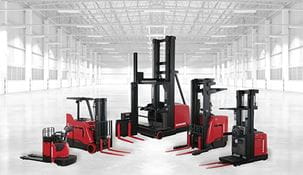
Raymond manufactures innovative electric lift trucks that deliver a lower total cost of ownership.
Learn More
Warehouse Products
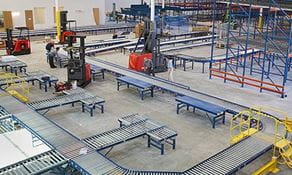
Learn more about the warehouse products offered by your local Raymond Solutions and Support Center.
Learn More

Warehouse Optimization Solutions
Manage smarter with fleet optimization, warehouse management systems and labor management solutions.
Learn More
Automated Solutions
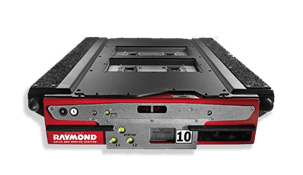
Let our experts evaluate your operation to determine if automated warehouse systems are right for you.
Learn More
