
Power your Operations Profit with Raymond Energy Solutions
-
Power your Operation’s Profit with Raymond Energy Solutions
Hear from Raymond’s Energy Storage Solutions experts Damon Hosmer & Blake Dickinson about how power study tools can help operations identify inefficiencies in their material handling fleet and how Raymond Energy Solutions products can lead to increased productivity and performance across their operations.
LINKEDIN LIVE - EPISODE 8
-
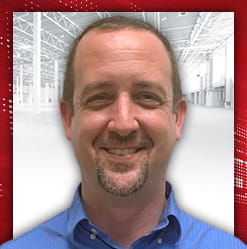
Blake Dickinson
Applications Engineering Manager, Energy Storage Solutions
The Raymond Corporation -

Damon Hosmer
Product Marketing Manager, Energy Storage Solutions
The Raymond Corporation
-
****Intro title needed
happy wednesday everyone and welcome to the raymond corporation's linkedin live series i'm damon hosmer product marketing manager for energy storage solutions here at raymond and each of our episodes here on our linkedin live series we feature special guests from the raymond corporation to discuss how intro logistics solutions can really help you maintain efficient productive operations our series is interactive so if anything piques your interest today
1. Why Raymond's energy products and services?
Damon Hosmer:
"We're unique in the sense that as a total Intralogistics solutions provider Raymond and our network of Solution and Support Centers are really uniquely positioned to not only optimize applications energy requirements, but also serve as single-point solution partners with the necessary knowledge and capabilities to provide you offerings across all the different material handling needs. One of the neat things about us is we bring data not bias. A lot of people may not necessarily know but Raymond truly prides itself on being the only forklift OEM that operates a truly independent battery test laboratory, helping validate life cycle and systems integration across all of our lift truck control architectures."
Download our Intralogistics Solutions Brochure
"We also offer a full product line including Lithium power systems designed specifically for our Raymond lift trucks, as well as private labeled Lead Acid and thin-clay pure lead technologies to help round out that portfolio and application requirements. Blake and his team have a really unique capability from a power studies perspective and alternative fuel source, consulting to determine the best solutions for each application requirements."
"Our charging portfolio is robust as well ranging from 5 to 30 kilowatts and offering chemistry agnostic platforms supporting both manual and automated equipment within each of your operations. We have a unique captive leasing and finance arm of the business as well, offering up optional comprehensive fixed energy pricing and equipment maintenance contracts. As well as, industry leading residual positions, independent of the chassis itself. From an integrated telematics perspective, reporting on energy usage along with energy consulting services really helps our customers kind of look at that end-of-life management as well. So, assistance with recycling, disposal, or secondary life allocations, as well we're committed to working towards a circular product economy with all of the Raymond Energy products. Then lastly, the full Raymond energy solutions portfolio really offers and supports optimization, automation as well as connectivity for the full Raymond ecosystem. So, everything from our career products to the iWAREHOUSE functionality, each one of those business segments really kind of takes data and liberates a number of different opportunities for us.”
Time in Video: 1:49
2. How can older fleets be optimized for greater efficiency with energy solutions?
Blake Dickinson:
“Some of the easy ones as I think about are eliminating battery changing and switching to opportunity charging or maybe employing a higher performing or maintenance-free battery technology such as TPPL or lithium. Limiting battery changing will improve fleet up-time due to eliminating lost productivity of the battery changing process and increased safety due to less cross-plan traffic. Additionally, the operators will see increased truck performance and lift speeds due to higher sustained voltages and better region acceptance of these newer battery technologies. Furthermore, the elimination of battery watering and extended weekly equalizations with these new technologies can dramatically simplify a customer's operation so they can focus on productive and value-added tasks with their team members and material handling equipment.”
Time in Video: 7:16
3. How has there been a shift more towards customers looking for true energy savings beyond the truck?
Blake Dickinson:
“There are two big trends occurring in the material handling market around new technologies for trucks. The first one is autonomous solutions. Power is mission critical and autonomous applications where human interactions need to be limited due to labor shortages and higher priority tasks. Uptime is related to charge time with autonomous vehicles, so, taking them offline to charge is very counterproductive. We need to either find a way to charge the vehicle in process like when it's temporarily stationary for loading and unloading or we need to charge very fast to minimize that downtime. Raymond is currently developing and evaluating both technologies for autonomous vehicles.”
“The second one is maybe a little more conventional, but it still has a lot of value and there's a lot of customers that can take advantage of that, and that's converting your IC fleet to electric. There are three big factors driving this move to electric trucks:
- Today, electric trucks have very similar or better performance than IC trucks today.
- Electric trucks provide a better environment for drivers due to the zero emissions, significant lower noise, and vibration, compared to IC trucks it's just a better environment. In fact, one of the first IC electric conversions I ever did, one of the drivers came up to us after that and really thanked us and said he really enjoyed the electric trucks. He said it improved his health and sleep, he had less headaches due to having that cleaner environment of electric trucks.
- Electric trucks save over 40% in maintenance costs, up to 80% in fuel cost, and can provide 30% longer service life, all adding up to over a dollar in savings per operating hour.
Time in Video: 8:34
4. How do Raymond's connected technologies tie into energy solutions?
Blake Dickinson:
“It starts with forklift battery monitoring and maintenance management to vehicle and operator utilization, electronic checklist, and impact management, to a full suite of professional services. Raymond gives you all the tools and insights you need to run more efficiently reliably and profitably some of these data-driven optimization offerings that support our energy solutions specifically include our iBATTERY device. iBATTERY, which is used with lead acid battery technology, records the historical data for warranty management and provide actionable alerts to help maintain performance and extend the life of your lead acid batteries. Also, Raymond offers our PSI or power source integrated communication protocol we use with our lithium batteries and fuel cells to communicate energy system status to the drivers allows us to optimize the truck performance as a function of the power system status and to collect historical data domain is a pleat and maxim maximized uptime both of these energy management systems are included as part of part of our iWAREHOUSE suite of fleet management tools.”
Download iBATTERY Industrial Battery Monitoring System Sell Sheet
Time in Video: 13:55
5. Typically customers associate alternative energy solutions with significantly higher costs, myth or fact?
Blake Dickerson:
“That's a fact, alternative energy solutions can be more expensive up front. However, what's really important is the total cost of ownership."
Damon Hosmer:
“A great way for customers to see this is through something like a power study, where we can really quantify those consumption economics and it can highlight inefficiencies with existing solutions as it stands today. What it is actually costing. Cost is always a consideration that customers are asking of and then comparing over the long run. Implementing newer energy solutions, how could we help them progress and drive continuous improvement to ultimately lower that total cost of ownership.”
6. Are there any considerations operations should keep in mind when thinking about making the switch from IC to electric lift trucks?
Damon Hosmer:
“There's kind of three areas that we have to look at, Blake hit on these a few minutes, ago but really lowest cost of ownership in the long term right as mentioned earlier. Electric forklifts can cost more up front, but the propane lifts ultimately sacrifice that sustainability piece. When you look at that lower total cost of ownership by saving money on fuel, maintenance, repairs, over the life of the truck I think that really helps drive that TCO."
"Blake also mentioned the improved operator comfort, the electric pieces of equipment are significantly better from an operator experience perspective. Enhancing comfort, reducing fatigue, eliminates a lot of the vibrations, acquired to ride less heat, and zero emissions, ultimately to reduce any of those harmful gases or vapors associated, and then reduced maintenance and repairs with the fewer moving parts. There's no spark plugs, there's no required oil changes, or tune-ups. Electric lift trucks require significantly less maintenance and repair and ultimately show that same dollar per hour savings mentioned earlier. So, I think that superior productivity is going to be key and the energy solutions technology powering those pieces of equipment are going to be extremely important in the future going forward for us.”
Blake Dickinson:
“One thing I might add is what I've experienced is when a customer has IC trucks, they have a tank farm outside and they go “Where am I going to recharge my vehicles” and they say, “I don't have space for a battery room”. Well today, we have many options not to use battery rooms. We have opportunity and fast charging chargers can be mounted in the air they can be mounted between the dock doors. So there should be no concern of switching from IC to electric.”
Time in Video: 16:27
7. What kind of challenges can Raymond energy solutions help us solve?
Damon Hosmer:
“There's a couple different points here for us, but to recap on what Blake just mentioned there that valuable real estate by eliminating the battery room is key and ultimately pallet position liberation for our customers helps them drive revenue and move more product through each of their warehouses. So, when we look at what are some of the challenges that we get faced with, productivity is certainly number one. Productivity challenges and operation as it stands today because of the higher volumes and velocities that e-commerce has driven. How can we look at and diagnose the operation by using Raymond Lean Management principles to really improve a current process or state and better help achieve operational goals today. Moving forward with some of the initiatives that our customers will share with us."
“Sustainability challenges are another one, product human value operation people are challenging us more and more with electrification efforts across the board. I think there's many misconceptions that folks have, and we can help bring visibility into how perception’s not always reality in those scenarios by looking at that total cost of ownership and the full ecosystem associated with it, driven by those performance metrics or KPIS."
“The last one really is unique application challenges. I think everyone can attest to the fact that there are more and more health and safety and unique situations driving the adoption of different technologies lithium-specific."
Blake Dickinson:
“One of the key benefits Raymond offers that sets us apart from the competition is that as a total intralogistics solutions provider Raymond, and its network of Solutions and Support Centers, is uniquely positioned to not only optimize your team's energy solutions but also serve as a single solutions partner with the necessary knowledge and capabilities to provide solutions across all your material handling needs. This includes as you previously mentioned a full product line of flooded lead acid batteries, TPPL, lithium batteries, and universal and opportunity chargers to match every power need. In fact, we're just about to launch our first in-house built TPPL battery. So, we're really starting to integrate our energy solutions into our production. We keep many of our most popular batteries and chargers available for quick shipment and most of our other energy solution products are available with lead times of 8 to 10 weeks. All of our lithium batteries are UL 2580 listed and certified for peace of mind. We provide energy solutions that are fully integrated with our trucks for safety and peak performance. We have also made large investments in our cell and pack testing equipment resources and facilities to continue look for that next great breakthrough technology. We provide industry leading battery capacities for maximum run times and up to 500 amps of charging through a single connector for increased uptime. We offer the longest cycle life and warranty in the industry which is extendable up to 10 years with competitive pricing and low total cost of ownership. We have a technology roadmap that provides automated and sustainable solutions for the future.”
Time in Video: 18:47
8. After seeing a huge boom in demand due to e-commerce how do you think Raymond energy solutions can help material handling providers optimize their operations to meet the surge in demand?
Blake Dickerson:
“Well, that's by understanding the customer's true consumption economics. From that we can right-size the power system to support today's operation while forecasting future growth expected for an organization. It's all about creating a healthy power ecosystem driven by data to enable continuous improvement efforts and create the truest form of low total cost of ownership. Technology + economics = the justification needed to help empower operations to make well-informed decisions.”
“Another aspect more operations are focusing on is how data fits into the decision-making processes. How leveraging data can improve efficiency. How do you think data fits into Raymond energy solutions offering?”
Damon Hosmer:
“Blake, I think there's really two levels of data that we focus on. First, the product data, we talked a little bit about the independent test laboratory that we utilize, to look at performance and life cycle of all of our products and ensuring that they meet industry offerings and needs in the marketplace. From the cell testing to the full safety systems integration testing, we're really looking to better understand the performance of each of these products today and how we best challenge our suppliers future forward to keep us to keep up with that industry demand.
“I think that the second component outside of the product data is really the utilization. That consumption economics that we keep talking about. Are we running effectively? Are there different ways that we potentially could look at and optimize power system assets to better accommodate changes being made on a daily basis? I think we all know that the only constant today in business is really that change. So, encouraging the behavior that we're looking for accountability for operators fleet improvements and then like you talked about earlier Blake, the mission critical autonomous applications. Those are all key areas that utilization data help us provide a unique solution specific to that application.”
“The last one that I’ll mention again, I go back to the end of life and power system management decisions. Looking at that asset from the commissioning date to the end of the life, if it's a lithium product looking at secondary uses based upon existing capacity after that term has been set and ultimately creating different hybrid scenarios for our customers to really kind of make unique decisions. When looking at reallocation of equipment end of life doesn't always mean going to recycling especially with the lithium product. So, I think that's a misconception people have as it stands.”
Time in Video: 24:09
You May Also Like:
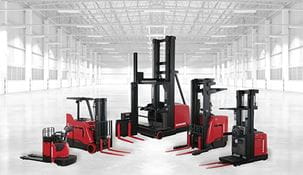
Raymond Forklifts
Raymond manufactures innovative electric lift trucks that deliver a lower total cost of ownership.
Learn More
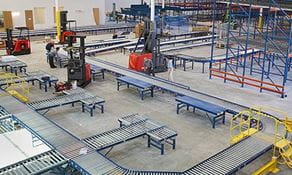
Warehouse Products
Learn more about the warehouse products offered by your local Raymond Solutions and Support Center.
Learn More

Warehouse Optimization Solutions
Manage smarter with fleet optimization, warehouse management systems and labor management solutions.
Learn More
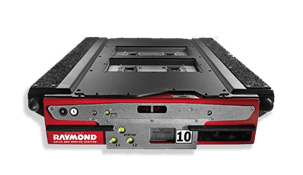
Automated Solutions
Let our experts evaluate your operation to determine if automated warehouse systems are right for you.
Learn More
