Next-Generation Learning Technologies To Optimize Your Training
-
Hear from Raymond’s Vice President of Customer Solutions and Support at Raymond, Dave Norton about using Next-Gen learning technologies to optimize your training.
1. How can operations leverage current technology to create engaging and fulfilling work environments?
Dave Norton:
"In our industry just like all other industries we're continuously refining processes to continuously improve so that we continue to evolve and improve our businesses and our customers businesses. We're living in a time where technology is constantly evolving and our industry is on the leading edge for utilizing tools, such as, telematics, virtual reality training, e-learning, and other dynamic forms of training in order to be successful."
"Virtual learning platforms are innovative tools that help develop more confident, efficient operators. We can actually put operators on a real truck, that doesn’t move, then train them to use the truck properly and what's improper. We can even figure out if the operator was comfortable elevating to 30 feet in the air or afraid of heights. Those types of things we can learn in a virtual environment, without the truck moving and without the operator moving. It really drives for a very positive experience for that that new employee/operator so that they can have a positive, confident start to their career.”
John Slavik:
"Absolutely, I think it provides a level of confidence because they feel secure that they're not going to damage anything while they're learning, so it takes that risk out of training."
Time in Video: 4:00
2. How can operator assist technologies play a role in improving employees daily experiences?
Dave Norton:
“Operators have a really complicated job they have a lot to do. They have counting, they have finding the right location, they have precise maneuvering of equipment, etc. So, what we're trying to do is develop tools or assist technology to help them make their job easier. Technologies like telematics and real-time location systems help us gather valuable information about the operation and providing actionable insights. This also allows us to do analysis and reporting to help optimize the workforce and the equipment, to make sure that you have proper balance of equipment, doing the right job it is intended to do, and operators to support that work. Raymond’s iWarehouse telematics system allows you to effectively manage and optimize your labor resources and obviously your equipment resources and take that actionable data into results would reduce costs delivering improved performance and better bottom line. Our system connects to all industrial equipment and enables you to create an environment of accountability and restrict vehicle use to only operators who are certified to operate those pieces of equipment. Hopefully avoiding OSHA citations. Making sure that we reduce product and facility damage with an operator who's not trained to operate a given piece of equipment.”
Download our Pick2Pallet Product Information Guide
“Another example of a technology that we are evolving and rolling out, is our Pick2Pallet (Pick to Pallet LED Light System) offering. This is a patented light System that eliminates, or reduces, picking areas by using pick to light technology within the forks of a pallet truck so you can pick two orders at the same time, and you reduce errors by putting the wrong product on the wrong pallet greatly reducing the possibility of pick or error and obviously having to replace that order down the road.”
Time in Video: 5:50
3. How would an operator assist system be able to reinforce material handling best practices?
Dave Norton:
“With a Raymond's Real-Time Location System (RTLS) we're able to define proper operational practices within a facility, where the truck should be stopping or slowing down. Making sure that we minimize the interaction between trucks and pedestrian walk areas in indoor areas. Operators can also receive notifications or alerts when they enter or leave a restricted area, so they know and again are reinforced that as a training aid to know that they're in or out of a restricted area, this increases operator awareness and assists in the proper equipment utilization. When trucks are operated in an efficient way productivity and efficiency are increased, it’s also important to remember that creating a culture of safety is an ongoing process. RTLS, telematics, and training are all parts of that process reinforcing the training that the operators receive at day one and in year 3, when they're going through their recertification. It takes a commitment to continuous improvement and willingness to supervise, train, and retrain forklift operators, and pedestrians alike. These are busy environments; we need to do our best to make sure that everybody's properly trained and successful.
Download our Real-Time Location System Brochure
Time in Video: 8:35
4. How is Raymond’s Virtual Reality different from others?
Dave Norton:
“Our Virtual Reality Simulator actually connects directly to the forklift trucks. Our forklifts, through our simulation port on the truck, allow the operator to use the exact truck they're going to be driving in a virtual environment, so that truck is not moving. We're able to use these tools to attract new talent through job fairs and, also, to help drive operator proficiencies to a higher level faster because we start with the very basics and very standardized way of training the operator from the very basics of the controls and even the daily checklist. What are the required checks for the daily checklist? Pointing to those aspects of the truck that they need to be looking at and verifying, that the tires are in good shape, or they've connected their fall protection, etc. The other thing that's really important here is with this tool instructors can immediately assess how that operator is performing and where they possibly need additional help. We can also have other operators watching and learning from the person who's actually on the unit, so all the people who are in the class can learn from each other on mistakes and/or successes as they're working their way through the lessons. This creates a standardized approach to making sure that all operators were behaving the same way in the same environment.”
“Our simulator is the first of its kind to offer instructional education modules through our “S” port and as soon as you're ready to take that truck out it, can quickly be disconnected and the truck be placed back into operation. This allows for not having to add additional equipment to your fleet in order to do training. Also, eliminates area within your facility specifically designated to training. We want to make sure we everybody realizes the training of a forklift operator is a three-part process; first is classroom learning, second is actually hands-on training, then, third is actual proficiency certification by a certified trainer verifying that the operator is now proficient with all the skills and ready to go and operate. This system is actually designed for easy use and easy use for the trainer. We have as many as 17 or 18 modules for some of our more complicated trucks, we have a total of 81 unique lessons, 300 total, using 11 of our different pieces of equipment to train on. Some of our customers use this as an opportunity for operators to move up into more complicated trucks, they do it on their own, they train themselves using virtual reality and then they prove their proficiency through the tool and then through hands-on verification with a certified trainer.”
John Slavik:
“We do have our “S” port which allows us to go right onto an actual truck but if you don't have a truck or if you don’t want to put it in a training room rather than out on your floor, we do have a simulated truck option as well.”
Time in Video: 11:02
5. How can VR and other learning technologies help attract the next generation of warehouse workers?
Dave Norton:
“We who have younger children or older children, all realize these folks are very engaged with virtual reality or online gaming and those types of things. So, this is a really new cool concept for millennials and generation Z, these folks are familiar with these types of technologies. They really do enjoy this innovative training method. You're going to be able to attract folks that may not have been interested in this as an occupation. Though we do talk about millennials and such, I’ve been with older people who really enjoy it as well, as a way of learning and becoming comfortable with a piece of equipment. I've had 60+ year old ladies saying, “I can't believe how engaging this is and how much I’ve learned, and I am so much more comfortable now to be able to go get on an actual piece of equipment that I'm comfortable and I know how to run that piece of equipment and how to do everything I need to know how to do.” I know we're talking about the young folks but I'm going to tell you that we've had some really great successes with older generations as well."
Time in Video: 15:00
6. What are some other operator technologies Raymond uses to support operator training?
Dave Norton:
“Raymond has a comprehensive yet modular online training program it can be customized to meet the customer's needs even into different types of equipment model by model. Our Raymond Safety on the Move operator training program provides the proper instruction for forklift training to maximize your operation for greater accuracy and efficiency through every shift. When an operator successfully completes the course’s testing, they receive OSHA certification. These courses are now available to be done with e-learning."
"Obviously, we've seen and talked about the virtual reality simulator. We actually have classrooms where our trainers can come directly to the customers and do classroom training. With this past year we are also doing a lot more virtual, instructor-led training through teams, skype, or zoom. We can actually hold trainings virtually with the operators so that we don't have to travel, and we don't have to be face-to-face. I also want to point out that we have the ability, and we have trainers to do the actual hands-on training at the end of your curriculum to make sure that you are certified and ready to go to work."
Time in Video: 24:19
7. Is the Virtual Reality Simulator compatible with all Raymond lift trucks?
Dave Norton:
“Raymond's Virtual Reality Simulator is not compatible with all but virtually all. We have 11 models of our truck that it actually plugs into, or we have bucks for. Of that, there's 300 different courses, so reach out to your local Solutions and Support Center if you have questions. Just as an overview, order pickers, reach trucks, counterbalance trucks, tuggers, and our VNA swing reaches all have a curriculum."
Time in Video: 26:02
8. Does Raymond have training modules for non-operator warehouse workers?
Dave Norton:
“We do have a Raymond Safety on the Move program that also includes a module for pedestrians. We want to make sure that pedestrians and operators know the rules of the road, so that pedestrians know where they belong, and operators know to make eye contact and use hand signals making sure that everyone knows who's going where at all times within a facility. That awareness and alertness is critical throughout these facilities. I also want to mention that as a supervisor it's really important that supervisors of forklift equipment operators are also trained in forklift safety and in pedestrian safety so that they know what they're looking for when they're coaching their operators. Making sure that people are behaving as required within all of the training programs that we provide."
Time in Video: 26:43
9. How does operator training result in increased productivity?
Dave Norton:
“I think with proper operator instruction and forklift training, we're able to maximize lift truck operation for greater accuracy and efficiency through every shift. With the confidence and knowledge of an operator knowing what they're doing and what the rules of the road are, they're going to become more proficient and more efficient so that they're using the equipment properly and not using it for what it's not intended to be used for. We also believe that the more trained an operator is, the more they own the job, the more they take care of the equipment over the long term. Greater productivity obviously results in less product damage from misuse and abuse all these things we're striving for every single day.”
Time in Video: 27:49
You May Also Like:
Raymond Forklifts
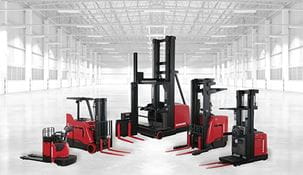
Raymond manufactures innovative electric lift trucks that deliver a lower total cost of ownership.
Learn More
Warehouse Products
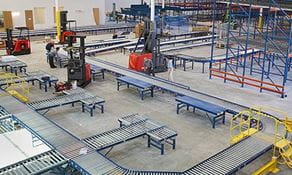
Learn more about the warehouse products offered by your local Raymond Solutions and Support Center.
Learn More

Warehouse Optimization Solutions
Manage smarter with fleet optimization, warehouse management systems and labor management solutions.
Learn More
Automated Solutions
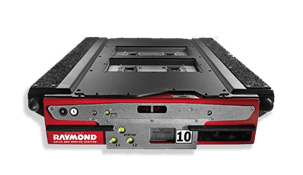
Let our experts evaluate your operation to determine if automated warehouse systems are right for you.
Learn More
